
You squat more than you realise. Every time you get out of bed, stand up from a chair, climb out of the car, pick up a child or lift a box, you’re performing a squat.
These tasks are known as ‘activities of daily living’ and for many people we see at Form Osteopathy at our Bundall clinic, regaining or maintaining the capacity to squat comfortably is exactly what they’re working towards.
The squat is just as fundamental in a gym setting as daily life, and there’s no shortage of variations to accommodate a person’s individual form or restrictions.
The back squat (low bar and high bar), front squat, sumo squat, split squat, goblet squat and hack squat each ask something slightly different of your body.
Used well, the squat is a foundational training tool that can support your aesthetic goals, help build resilience against injury, and contribute to your personal goals and athletic performance.
In this guide, we will break down what a squat actually asks of your ankles, knees, hips and spine, what can get in the way, and how to adapt your squat when the traditional squat movement isn’t available.
What is a squat?
First up, what actually is a squat? A squat is a closed kinetic chain task, meaning your feet stay fixed on the ground while your body moves.
It requires coordinated flexion and extension of the hips, knees and ankles to lower and raise your centre of mass while you maintain stability over your base of support.
Because it involves multiple joints and works several muscle groups at once, the squat is known as a compound exercise.
It’s one of the ‘big five’ compound movements (alongside the deadlift, bench press, pull-up and shoulder press).
A well-rounded training program will usually include some combination of these lifts, although the specific variation may change from person to person.
They’re then complemented by supplementary work, such as exercises that train individual joint function, more complex movements, power-based movements (i.e. squat jumps) or a rehabilitation focus.
Which muscles does a squat use?
As we’ve covered, a squat is largely made up of flexion and extension at the hip, knee and ankle, while the trunk stays stable and the shoulder girdle supports the load.
Each part of the movement asks the muscles to work in a slightly different way.
Standing up - the concentric phase
Extension happens as you stand back up from a squat and return the load to the starting position.
This is known as the concentric phase, where the working muscles shorten as they produce force.
It’s usually the part of the squat that demands the most effort.
The primary movers during this phase include the glute max and adductor magnus (particularly during deep squats) that extend the hip, the quadriceps that extend the knee, and the gastrocnemius and soleus which together plantar flex the foot.
Lowering down – the eccentric phase
Flexion happens as you lower your trunk into the squat position. This is the eccentric phase.
Gravity assists the descent by pulling your body downward. Your muscles work to control the speed and direction of the movement.
It still requires a high degree of muscular effort, but here the muscle fibres are lengthening while tension is maintained.
The same muscles mentioned earlier are involved during descent, though they are now working eccentrically (lengthening).
The trunk
Very little concentric or eccentric work occurs around the trunk during a well-executed squat.
Most of these muscles work isometrically to stabilise and efficiently connect the movement of the lower limbs with the weight being supported.
The spinal extensors (erector spinae and multifidus) create an extensor moment to counter the tendency of the trunk to flex forward.
The abdominal muscles (transverse abdominus, obliques and rectus abdominus) act to increase intraabdominal pressure, and resist excessive lumbar extension (arching), and thereby create trunk stiffness allowing for efficient force transfer between the lower and upper limbs.
Breathing mechanism
The diaphragm (our primary muscle of respiration), the pelvic floor and the abdominal wall work together to regulate breathing while also contributing to trunk stability.
During activities such as squatting, these structures coordinate to generate and manage intra-abdominal pressure, helping to support the spine and transfer force efficiently between the upper and lower body.
You may have heard of the Valsalva manoeuvre, which involves taking a breath and holding it while bracing the trunk to maximise intra-abdominal pressure.
While this strategy can increase spinal stiffness and lifting performance, we generally do not encourage prolonged or excessive breath-holding in most individuals, as it can significantly increase blood pressure and may not be appropriate for people with cardiovascular conditions, pelvic floor dysfunction, hernias or prolapse.
Instead, we aim to develop a dynamic core that can maintain postural stability while allowing normal breathing to continue. In other words, the goal is to breathe and brace simultaneously, enabling the respiratory system and stabilising system to work together rather than competing with one another.
Targeting different muscles when you squat
Depending on how you squat, different muscles can be targeted, as the way you squat can shift where the demand on your muscles lands.
Squat depth, stance width, foot position, bar placement and how far you lean forward can all change the relative contribution of the quadriceps, glutes, adductors and trunk muscles.
For example, a front squat tends to keep the trunk more upright and place more demand on the quads, while back squats tend to lean the trunk further forward and place more demand on the glutes.
A wider stance, like in a sumo squat, may bring the adductors and glutes more into play.
How does an osteopath assess your squat technique?
When we assess your squat technique, we watch it in all three planes of motion – the sagittal plane, the frontal plane and the transverse plane.
Each view tells us something different about how you move, and together they give us a much fuller picture.
This kind of movement assessment is a regular part of how we work out why a squat feels restricted, uncomfortable or inefficient.
The sagittal plane (side view)
The sagittal plane divides the body into left and right halves, and it’s best observed from the side.
For most people this is the primary view for assessing squat mechanics.
From here we can see the overall descent and ascent of the squat, and how upright or inclined the torso stays throughout the movement.
We watch the position and movement of the spine, and the position of the pelvis, including any posterior pelvic tilt at the bottom of the squat.
We also see how the hips, knees and ankles flex and extend, whether the heels lift, how far the knees travel forward and how far the hips travel backward.
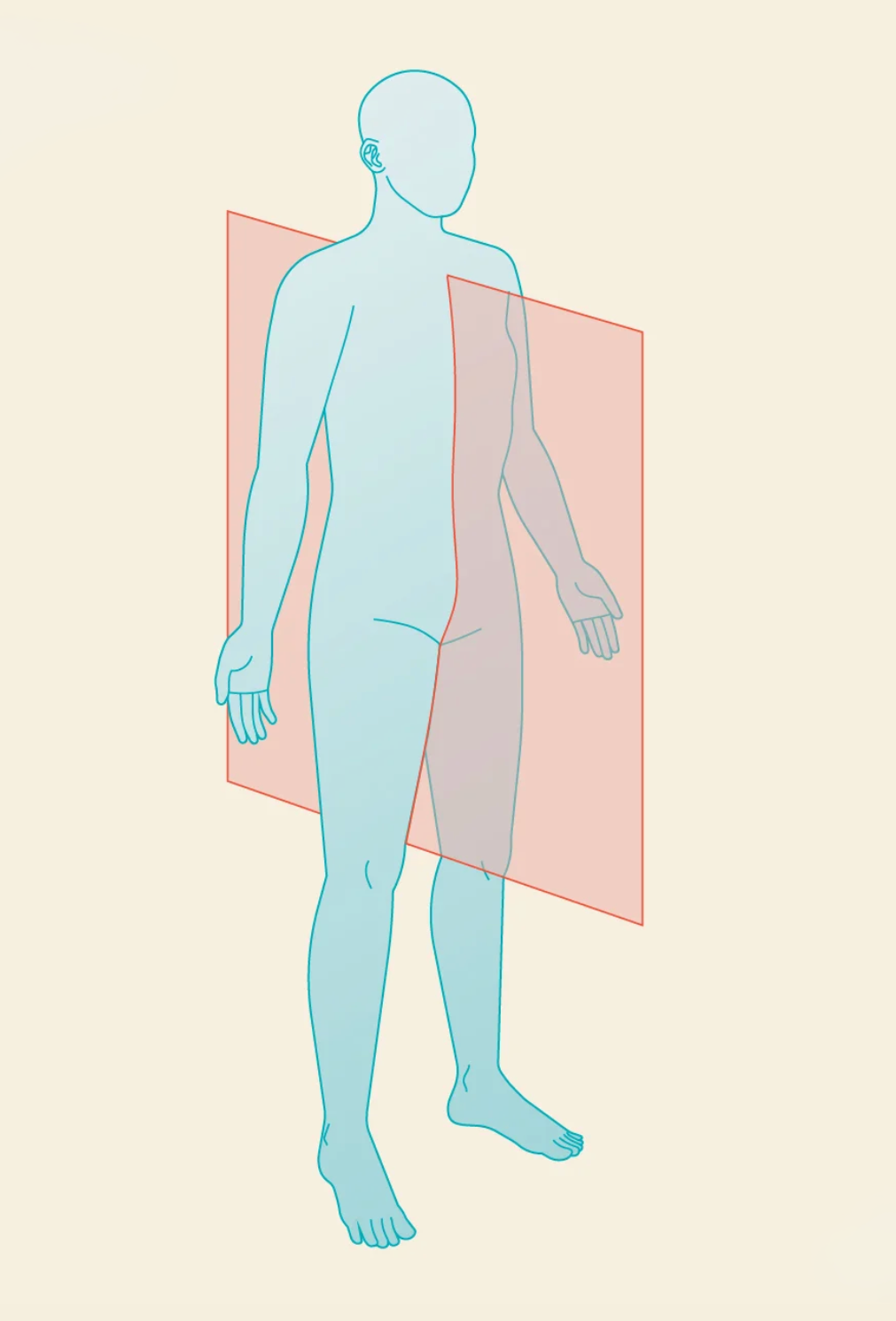
Image by Brittany England for Healthline.
The frontal plane (front or back view)
The frontal plane divides the body into front and back halves, and we observe it from the front or from behind.
Here we’re mainly looking at symmetry and weight distribution.
The things we look for include whether the knees are tracking in line with the feet, and whether they collapse inward (valgus) or drift outward.
We check whether one shoulder sits lower than the other and whether the pelvis drifts to the left or right.
We also look at whether weight is spread evenly through the feet, and whether one foot pronates more than the other, or one heel tilts.
This view can give us important clues about strength symmetry, foot posture, hip mobility and control, balance or even confidence in the movement.
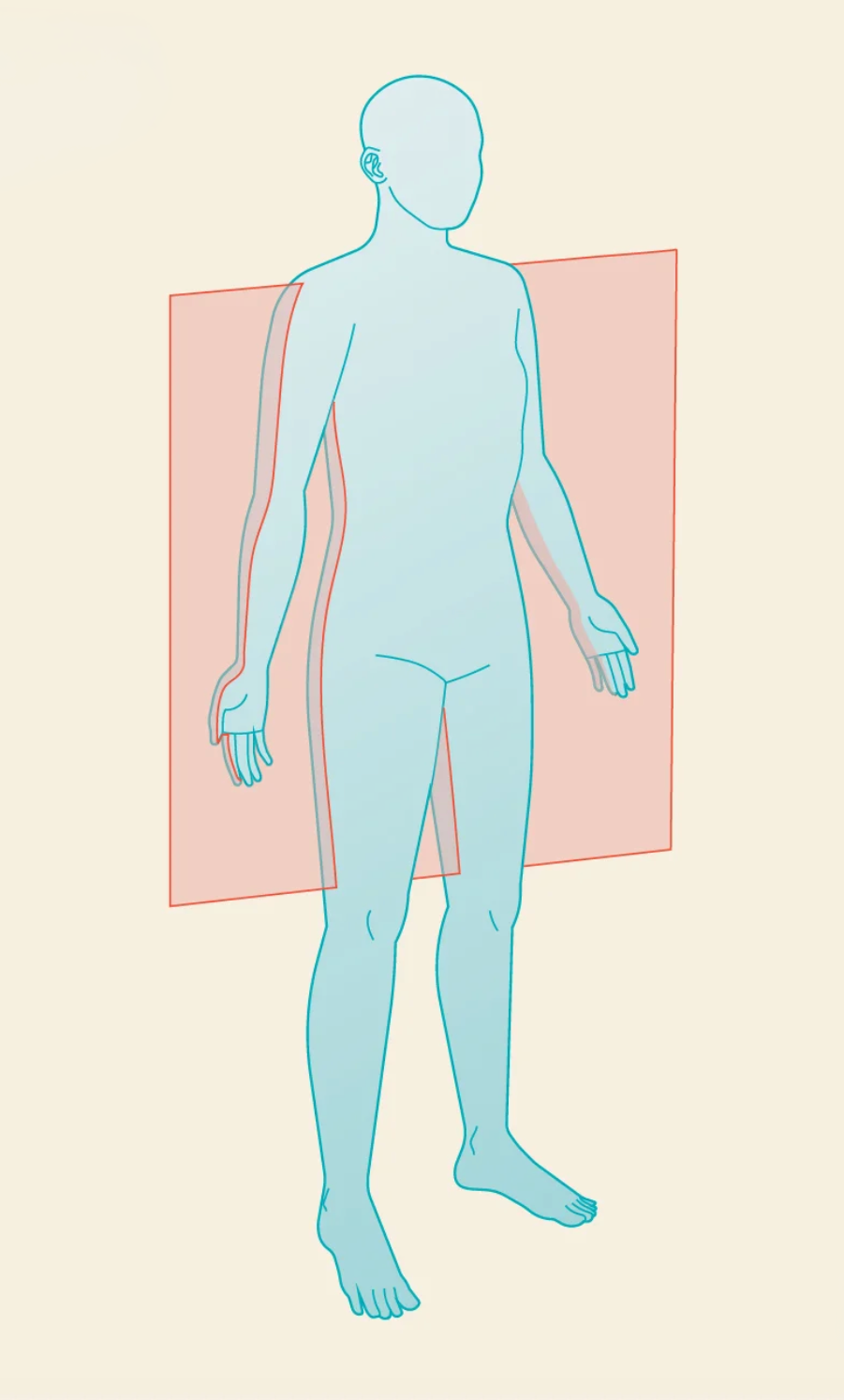
Image by Brittany England for Healthline.
The transverse plane (rotation)
The transverse plane divides the body into upper and lower halves and concerns rotational movement.
It can be a little harder to appreciate, but it’s often where we pick up subtle asymmetries.
We might notice differences in foot position or see that one knee travels differently to the other.
We also watch for rotation through the pelvis, and through the trunk or shoulders.
Small differences are normal, and no one squats in perfect symmetry.
What we’re looking for are the more obvious asymmetries that may help explain why a squat looks or feels restricted, uncomfortable or inefficient.
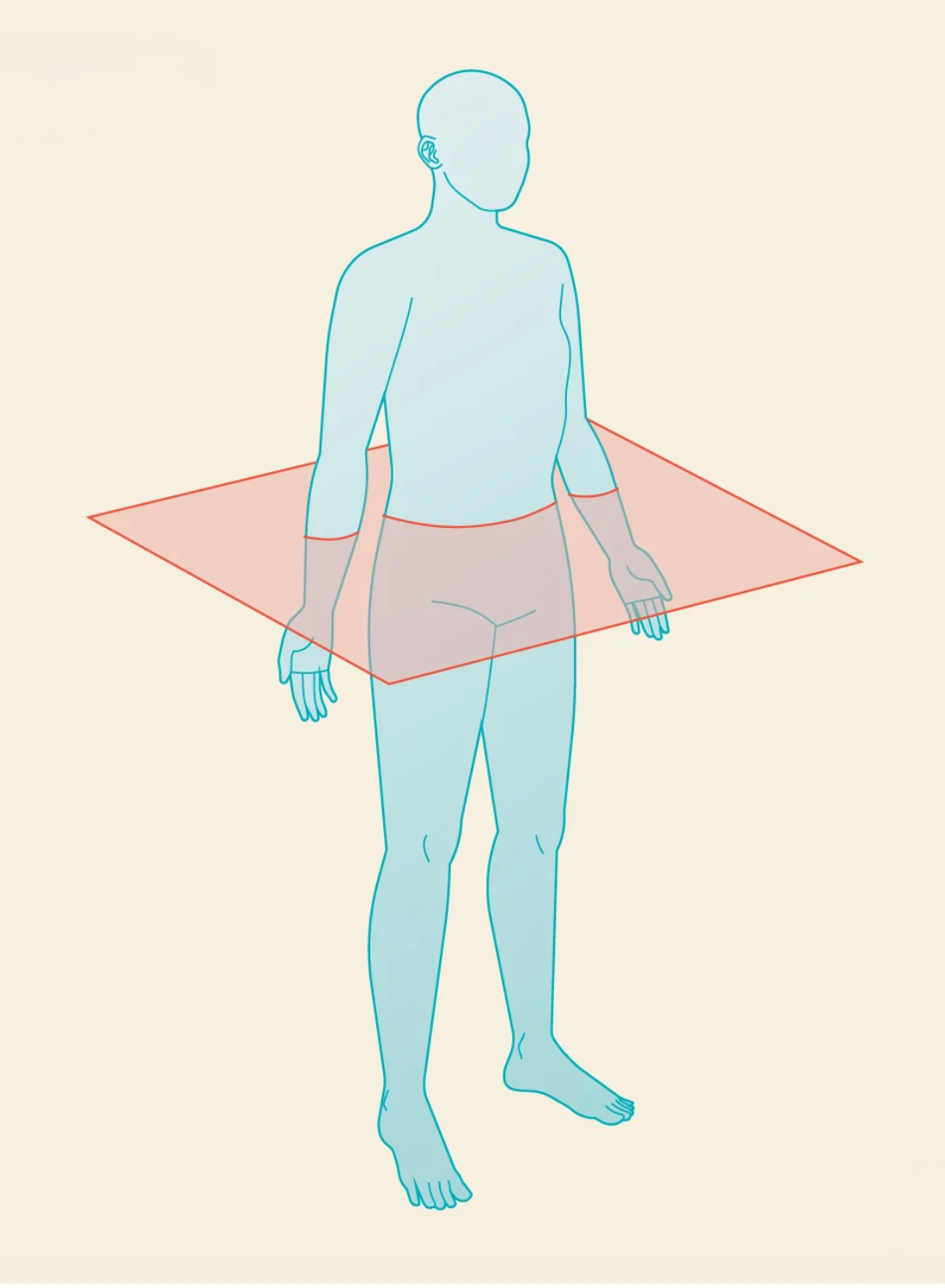
Image by Brittany England for Healthline.
What joint mobility do you need to squat well?
A good squat depends on several joints sharing the work, and the ranges in the next section come from studies of healthy adults.
Treat them as reference points rather than pass-or-fail targets. Squat depth, stance and body proportions all change what any one person needs.
Why can't I squat deep? Common limits at the ankle, hip and knee
Reduced mobility at any joint in the movement pattern can change how a squat looks and feels, and a range of conditions can play a part.
Here is what we commonly see, working from the ground up.
The ankle
One of the most important movements in a squat is ankle dorsiflexion. With the foot planted, it happens as the shin moves forward over the foot.
For most people, a squat needs roughly 30 to 40 degrees of dorsiflexion, depending on depth, stance and individual proportions.
A simple way to screen this is the weight-bearing lunge test, which shows how much dorsiflexion is available on each side.
When there isn’t enough dorsiflexion, the body usually finds another strategy.
You might see:
Increased forward trunk lean
Heels lifting
Increase knee valgus
Reduced squat depth
Weight shifting to one side
Excessive pronation through the foot
Common factors that can limit ankle motion include:
Calf tightness
Achilles tendon stiffness or pain
Anterior ankle impingement
Osteoarthritis
Previous surgery or trauma
Stiffness through the foot (particularly the big toe joint)
Certain foot structures such as a rigid high arch
Some of these factors are modifiable, and some are not.
The knee
Moving up, we have the knee. During a squat the knee flexes as you descend and extends as you stand.
A squat to roughly parallel needs around 90 to 100 degrees of knee flexion, while a deep squat may need 120 to 140 degrees or more.
Some forward knee travel is also expected. If your ankle is moving normally, some knees-over-toes movement is completely normal.
Unlike the ankle and hip, the knee is relatively rarely limited by general stiffness alone.
A knee that can’t bend or straighten fully often raises questions about previous injury, arthritis, swelling or another structural restriction.
Things that may limit knee function include:
Patellofemoral pain
Patellar tendinopathy
Chondromalacia
Meniscal pathology
Osteoarthritis
Previous ligament or intra-articular injury
Knee replacement surgery
Quadriceps injury
The hip
If there’s one joint where individual variation matters most, it’s the hip.
A deep squat often requires roughly 110 to 130 degrees of hip flexion, and depending on your squat style, hip abduction, internal and external rotation and pelvic tilt also come into play.
Not every hip is built the same. The shape and orientation of the hip socket varies considerably between people, and these differences can influence which positions feel comfortable.
Some people squat well with a narrow stance, while others do better with a wider stance or more toe-out. Neither is necessarily wrong.
This is where we often benefit from being flexible in our thinking as not every hip is built the same.
For example, in femoroacetabular impingement syndrome (FAIS) a person’s particular hip bone shape can cause degeneration in the joint, which can lead to a reduced squat depth. You can read more about FAIS here.
Other potential limitations around the hip include:
Hip dysplasia
Osteoarthritis
Previous hip replacement
Labral pathology
Adductor injury
Gluteal pain presentations
Soft tissue stiffness
Connective tissue disorders
You may see:
Increased lumbar flexion (‘butt wink’)
Increased hip external rotation
Reduced squat depth
Weight shifting to one side
Increased knee travel
Increased/decreased torso angle
In many cases, changing stance width, foot angle, depth or load position makes a big difference to comfort and performance.
We’d encourage coaches and lifters to experiment here. What looks like poor technique is sometimes a person navigating the anatomy they have available.
The spine
Finally, we have the spine.
When discussing squats, there can be a tendency to think about spinal positions as simply right or wrong, but in reality it is more nuanced.
For example, a small reduction in lumbar lordosis (curve) during a deep squat is normal and expected, particularly as an individual approaches the end of their available hip flexion.
What we're generally looking for is a movement pattern that appears controlled and appropriate for the individual and the load being used.
Factors that may influence spinal loading or movement strategy include:
Spinal fusion surgery
Osteoarthritis and inflammatory arthritis
Disc pathology
Neural tension
Pain or apprehension regarding movement
Someone with a history of back pain may choose a very different strategy from someone with no symptoms, and that doesn’t automatically mean the squat is wrong. It simply gives context for why they move the way they do.
Which muscles stabilise a squat? Movers, opposers and stabilisers explained
Every movement of a joint (i.e. knee, hip) involves three muscle actions – the agonist, the antagonist and the stabiliser.
The agonist is the ‘mover’ that produces the action, the antagonist is the ‘opposer’ that controls and resists it, and the stabilisers hold the surrounding joints steady.
This combination of activity is what allows healthy, controlled joint motion and stability.
During the ascent of a squat, the quadriceps extend the knee and the gluteus maximus extends the hip, making them the primary agonists (movers).
The hamstrings help regulate the knee extension produced by the quadriceps, making them the antagonists (opposers) during this movement, as they work to control the joint and coordinate the movement. The hip flexors are also providing opposing tension to the hip extension.
During a squat, the abdominal muscles, spinal extensors, deep core muscles, gluteus medius and smaller hip rotators work continuously to prevent excessive trunk movement, spinal collapse or unwanted hip and knee motion.
These muscles act as the stabilisers, working to maintain joint position and alignment.
For example, if a person's knees collapse inward during a squat (dynamic valgus), the issue is often not that the quadriceps are weak, but that stabilising muscles such as the gluteus medius and external hip rotators are unable to adequately control femoral and pelvic position.
Similarly, a forward trunk collapse may indicate insufficient trunk stiffness or limited ankle and hip mobility, increasing the stabilising demands on the spinal and abdominal musculature.
It’s important to note that these roles of agonist, antagonist and stabiliser are not fixed. A muscle may act as an agonist, antagonist or stabiliser depending on the phase of the squat and the movement being examined.
How to adapt your squat if mobility is limited
It’s important to choose a variation that suits you. This can be guided by an osteopath or personal trainer.
Here are some simple squat variations that you could try depending on your limitations:
Front squat
A front squat changes where the load sits.
With the bar resting on the front of the shoulders (anterior load), the combined centre of mass (you and the weight) shifts forward. A more upright trunk is required to keep stop the bar from falling.
Biomechanically this results in:
Less forward lean
Greater thoracic extension demand
Higher upper back activation (trapezius, rhomboids, spinal extensors)
Reduced shear force on the lumbar spine
One key difference is distribution of load between the knee and hip:
Greater knee flexion required
Greater forward knee travel
Slightly reduced hip extensor moment
Higher quadriceps demand than with a back squat, though this does not equate with greatly reduced gluteal demand
A few other notable differences:
Clean grip requires greater wrist and elbow mobility than a back squat
Crossarm grip reduces the upper limb mobility requirements, making it a useful alternative
Most lifters front squat less weight than they can back squat, with upper back strength and front rack position often being the limiting factors rather than leg strength.
Goblet squat
Similar to a front squat, a goblet squat provides an anterior load by holding a dumbbell or kettlebell with both hands in front of our body.
This requires substantially less upper limb mobility than a front squat, and the weight is typically much lighter and easier to control.
Similar to a front squat, the anterior positioned weight provides a natural counterbalance, allowing for a more upright posture than a back squat, reducing shear loads on the lower back.
Split squat
A split squat changes the base of support by adopting a staggered stance: one foot in front, one behind. This stance increases demand on the lead leg.
Biomechanically, what we see is:
Greater unilateral lower limb loading
Increased frontal plane stability demand at the hips and pelvis
Lower balance demand than other true single-leg exercises (i.e. bulgarian, pistol squat)
Lower axial spinal loads than heavily loaded bilateral squats
Ability to bias either the hip or knee depending on stride length and trunk postion
One key difference is the distribution of load between the knee and hip:
A shorter stride length generally increases knee flexion and quadriceps demand
A longer stride length generally increases hip extensor demand
Greater loading of the lead leg compared to bilateral squat variations
Significant gluteus medius and lateral hip contribution to maintain pelvic stability
The rear leg contributes to balance and force production but typically experiences substantially lower loading than the lead leg
Other notable differences include:
Requires less ankle dorsiflexion than many deep squat variations
Allows meaningful lower-limb strength training with relatively modest external loads
Can expose asymmetries in strength, balance, mobility and movement control
Provides a useful bridge between bilateral squatting and true single-leg training
Often permits higher local muscular loading with less total spinal loading than back squats
Trap bar squat
With a trap bar squat, rather than supporting the weight on our backs, or holding in front, that weight is held at the sides using a trap bar.
This keeps load closer to our body’s centres of mass and make the movement feel more comfortable.
This results in a relatively upright trunk, less forward lean than most back squats, and less upper limb mobility requirements than front squat variations.
One key difference is the distribution of load between the knee and hip:
Moderate-to-high knee extensor demand
Moderate hip extensor demand
Greater quadriceps contribution than many hip-dominant exercises
Significant gluteal contribution throughout the movement
A relatively balanced contribution from the knee and hip extensors
Other notable differences include:
Requires substantially less shoulder mobility than front or back squats
Eliminates the need for a front rack or back rack position
Allows meaningful lower-body loading without placing a barbell on the spine
Often easier to learn than barbell squat variations
Grip strength may become a limiting factor before lower-limb strength when loads become heavy
Can be performed using low or high handles depending on the trap bar design
Modifying a squat
From an osteopathic perspective, some mobility limits can be modified, so we may be able to work on the joint that is limiting you.
For example, if ankle range of motion is the issue, we might try calf stretches, foot and ankle mobility drills and isolated calf strengthening.
The key is to adjust the range of motion and the load.
We can also change the load placement i.e. with a back squat, changing from a high to a low bar, or with a front squat, changing how the bar is held. Small changes here can make a big difference to comfort.
It is also helpful to use aids/adjacents where appropriate, such as elevated heels, bands, straps, box, etc.
Which squat variation is right for your goal?
What you want from your squat should shape how you do it.
If depth and control are the priority, it often makes sense to reduce the load and own the full range of motion first.
If glute growth is the priority, we either focus on loading the deep part of a squat well or use additional exercises to achieve this goal.
If athletic performance is the goal, you may mostly load the upper range of the squat and focus on power more than maximal strength.
‘Your knees should never go past your toes when you squat.’ This and other internet myths.
There are a few common misconceptions we hear from patients in the clinic when it comes to how you should squat, which we want to discuss.
Myth 1: your knees should never go past your toes
If we had a dollar for every time we heard this one!
This myth traces back to a study from the 1960s and another in the 1970s that magazines perpetuated. The studies said that forward knee travel might increase stress on the knee joint.
But a 2003 study challenged this notion, finding that while restricting knee travel can decrease the load on the knee joint, it will transfer that load to your hips and lower back.
It is plausible that consistently avoiding knee-forward positions may contribute to reduced knee capacity over time through a lack of exposure to healthy loads.
How far your knees travel depends on your body design and the squat variation you are performing.
The real key to remember when performing a squat is to maintain balance over the middle of the foot and allow the knees to track in line with the toes throughout the movement.
Myth 2: femur length decides your squat
Femur length does influence your squat posture and mechanics, but it doesn’t determine your ability to squat well.
Longer femurs usually result in a greater forward torso lean in order to maintain balance, whereas shorter femurs allow for a more upright torso position.
But other factors such as tibia length, torso length, ankle mobility, hip socket structure and bar placement all influence the shape of your squat.
A clinical perspective on squat technique
From a clinical perspective, there’s no single correct way to squat.
A good squat depends on how your ankles, knees, hips and spine move, and on your anatomy, history and goals.
Limited movement at one joint is common and often adaptable, and many things that look like poor technique are simply someone working with the range they have available.
Changing variation, stance, depth, load position or foot position can make a big difference, and sometimes movement can be improved with treatment and exercise rehabilitation.
At Form Osteopathy in Bundall, we assess how you squat and move, look at what might be limiting you and help you build a plan that fits your body and goals.
If squatting is painful or you feel stuck, an assessment is a good place to start. Book in with the team now for an assessment.
References:
https://theprehabguys.com/blog/different-types-of-squats-and-why-to-do-each/
https://www.physio-network.com/blog/knees-shouldnt-pass-toes-during-the-squat-myth-or-truth/
https://brookbushinstitute.com/articles/femur-length-and-squat-form
https://bretcontreras.com/how-femur-length-effects-squat-mechanics/